
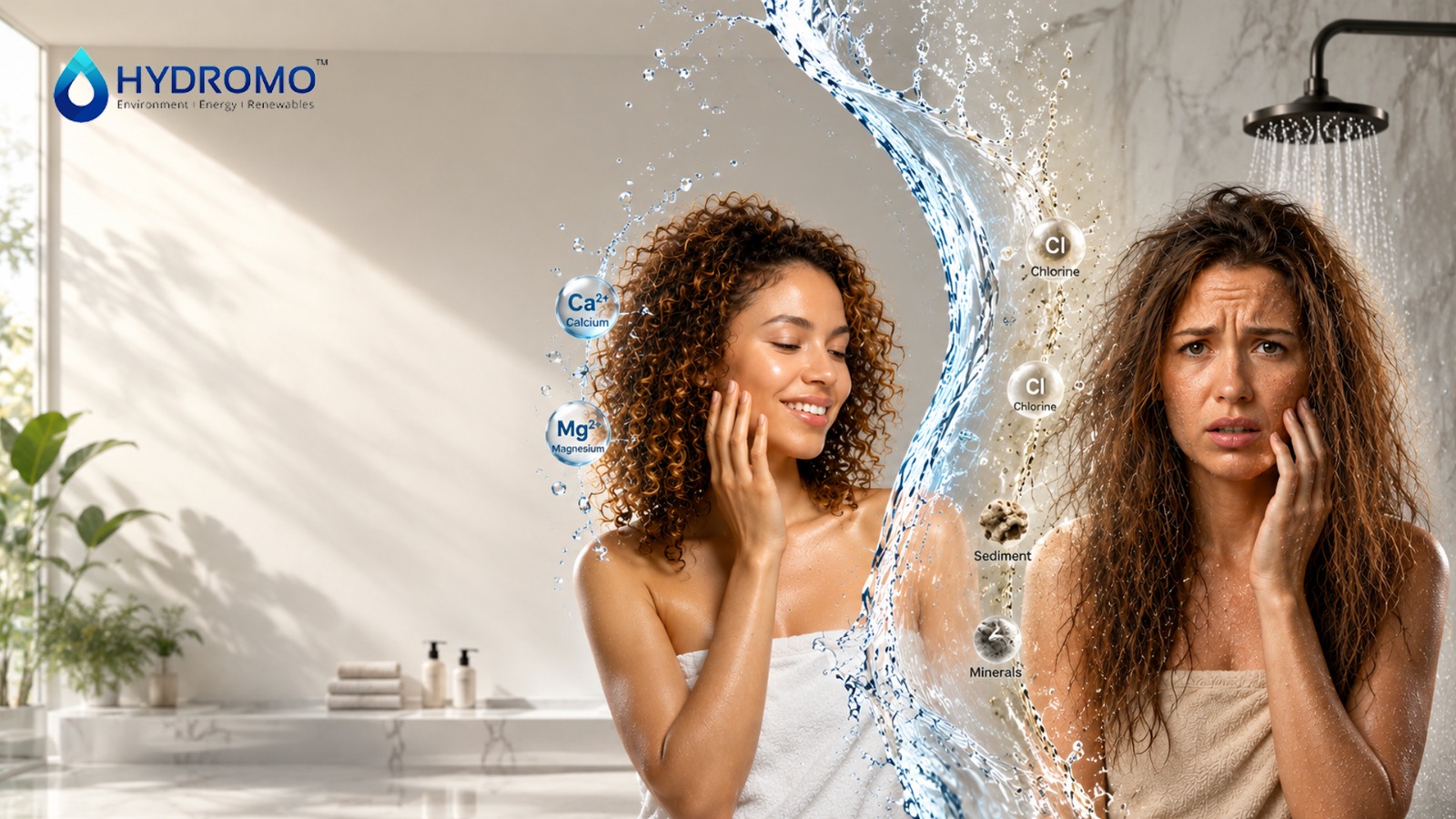
Water you’re washing every day can absolutely affect your skin and hair. It’s not just H₂O flowing through your pipes; it’s carrying minerals and, depending on where you live, maybe chlorine, sediment, or a few other things you’d rather not think about while you’re in the shower.
If your skin’s been feeling tighter than usual, or your hair just refuses to cooperate no matter which shampoo you switch to, don’t rule out your water supply. It’s an easy thing to overlook because nobody thinks to blame the tap.
This isn’t a pitch to scare you into buying a filter today. It’s just worth understanding what’s actually happening so you can decide for yourself whether it’s worth doing anything about.
How Water Quality Shapes Your Skin and Hair Over Time
Think about how much water actually touches your skin and hair in a given week. Showers, washing your face, and rinsing your hair—it adds up to a lot of contact, far more than most skincare products get.
And every time, it leaves something behind. Usually minerals. The effect isn’t dramatic or immediate; it’s the kind of thing that builds quietly over months, which is exactly why people rarely connect the dots.
What Hard Water Actually Means
“Hard water” isn’t a bad thing to drink, and it’s not dirty water. It just means there’s more dissolved calcium and magnesium in it than soft water has. That’s the whole definition.
But those minerals behave very differently on your skin and in your hair compared to softer water. You genuinely can’t tell just by looking at a glass of it; hardness doesn’t show up to the naked eye.
A Few Signs Your Water Might Be the Culprit
A handful of things tend to show up together when hard water is involved:
- Soap or shampoo won’t lather properly, and feels like it never fully rinses off
- Skin feels tight or dry not long after you’ve showered
- Chalky white buildup around taps, showerheads, or shower glass
- Hair feels rough or tangles more than it used to
- Laundry comes out stiffer than you’d expect, even with fabric softener
If a couple of these sound familiar, it’s worth paying closer attention to your water.
What Hard Water Does to Skin
Here’s roughly what happens: hard water leaves a thin film of minerals on your skin after you rinse. That film makes it harder for soap to wash away completely, and the leftover residue is often what leaves skin feeling dry or tight.
For some people that shows up as mild flakiness, especially once the weather turns colder. Others just notice their skin doesn’t feel as soft after a shower, even with a good moisturizer. Occasionally, irritation actually seems to get worse right after washing rather than better, which feels backwards but tracks with what’s happening chemically.
If you already deal with sensitive skin or something like eczema, you may notice these effects sooner and more sharply than someone without those conditions. And to be clear, if skin issues are persistent, that’s a conversation for a dermatologist, not something to self-diagnose based on your water alone.
What Hard Water Does to Hair
Hair fall linked to hard water usually isn’t about the water attacking your follicles directly. It’s more that minerals build up on your scalp and along the hair shaft, and that buildup makes hair feel heavier, rougher, and less manageable—which people sometimes mistake for actual hair loss.
You might notice hair that feels coated even right after washing. More frizz than usual. Hair snapping more easily when you brush it. If you color your hair, you may also notice the color fading faster than it should.
Worth saying plainly: hard water is one piece of a bigger puzzle. Diet, stress levels, and your actual hair care routine all factor in too — it’s rarely just one thing.
It’s Not Only About Hardness
Calcium and magnesium get most of the attention, but they’re not the only water quality issues that touch your skin and hair.
Chlorine, which most municipal water supplies use for treatment, can be drying; with enough exposure, swimmers tend to notice this more than most.
Sediment is just fine particles like sand or rust that make water look cloudy and can be irritating for sensitive skin.
Iron shows up as that reddish-brown staining you sometimes see on fixtures, and it can leave a similar tint on lighter hair over time.
And high TDS — total dissolved solids — basically means your water is carrying a heavier overall mineral load, which can make hardness-related effects feel more pronounced.
Hard Water vs Soft Water, Side by Side
| Factor | Hard Water | Soft Water |
| Mineral content | High calcium and magnesium | Low calcium and magnesium |
| Effect on skin | Can feel dry or tight after washing | Feels smoother, rinses more easily |
| Effect on hair | Rough, dull, or weighed down | Softer, generally easier to manage |
| Soap performance | Poor lather, hard to rinse | Lathers well, rinses clean |
| Scale formation | Visible buildup on taps and glass | Little to none |
| Day-to-day experience | More time spent cleaning fixtures | Noticeably less maintenance |
How to Actually Check If Your Water Is Hard
You don’t have to guess at this. A few practical ways to find out:
- Check for scale around your faucets, showerhead, or kettle — it’s usually the first giveaway.
- Pay attention to how soap behaves. If it won’t lather or leave a film, that’s a strong hint.
- Get an actual water hardness test. At-home kits work fine for a rough read, but a professional water quality test gives you real mineral numbers if you want to be sure.
Where Water Treatment Fits In
Once you know what’s actually in your water, a few options come into play:
- A water softener addresses calcium and magnesium directly
- A filtration system can target sediment, chlorine, or other specific issues
- Water quality testing tells you exactly what you’re working with, so you’re not guessing at a fix
None of this is a guarantee that every skin or hair issue disappears. But it does take care of the water-related piece, which is often more within your control than people expect.
Bottom Line
There’s a real, well-documented connection between hard water and dry skin, and hair fall due to hard water is a genuinely common complaint in areas with mineral-heavy water. The reassuring part is that once you understand what’s going on, the fixes are pretty straightforward, starting with a simple water test to see what you’re actually dealing with.
FAQs
1. Does hard water cause hair fall?
Not directly. But mineral buildup can leave hair weak, dry, and more prone to breaking, which often gets mistaken for hair loss.
2. Can hard water cause skin problems?
It can contribute to dryness or irritation for some people, particularly those with sensitive skin, but it doesn’t cause skin diseases on its own.
3. How do I know if I have hard water at home?
Look for scale around taps and showerheads, notice how soap lathers, or just get a hardness test done for an actual reading.
4. What’s the real difference between hard and soft water for skin?
Soft water rinses away more completely and tends to leave skin feeling less dry than hard water does.
5. Do shower filters remove hardness minerals?
No, they mostly deal with chlorine and sediment. Hardness specifically needs a water softener.
6. When does it make sense to get a water softener?
If you’re dealing with scale, dry skin, or difficult hair despite doing everything right otherwise, a test followed by a softener is a reasonable next step.