
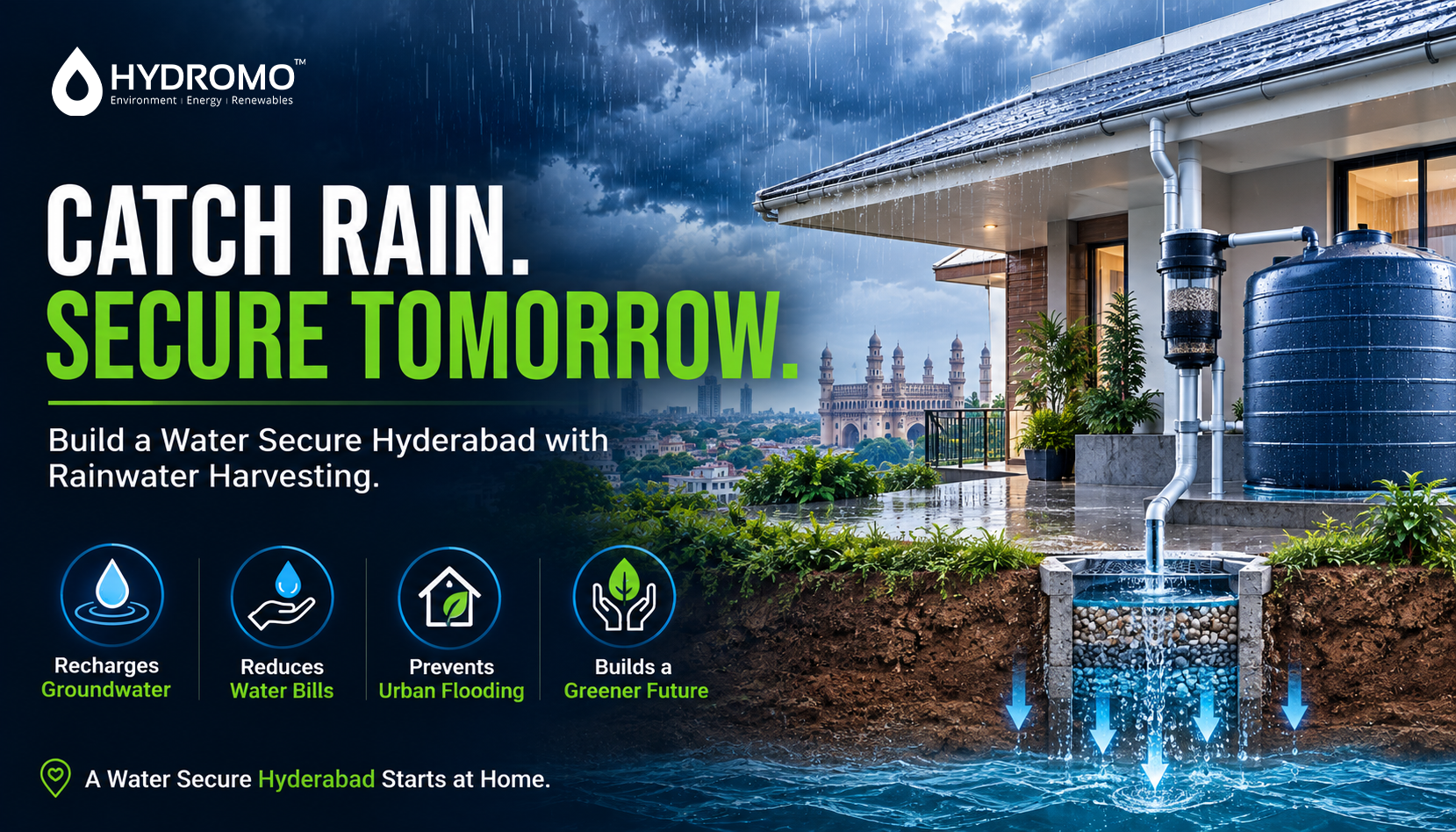
In a country where monsoons bring both life and chaos, rainwater harvesting stands as one of the simplest yet most powerful solutions to India’s growing water crisis. From bustling urban rooftops in Hyderabad to vast rural farmlands, this ancient-yet-modern practice is making a comeback. It collects, stores, and reuses rainwater that would otherwise run off into drains or evaporate. As climate change intensifies droughts, floods, and groundwater levels plummet, rainwater harvesting in Hyderabad isn’t just an eco-friendly choice—it’s becoming a necessity for sustainable living.
This high-volume guide dives deep into everything you need to know: from the science and methods to real-world implementation, benefits, policies, and success stories. Whether you’re a homeowner in Telangana, a builder, a farmer, or an environmental enthusiast, you’ll walk away with actionable insights. Let’s explore how catching rain can recharge our future.
What Is Rainwater Harvesting, Really?
Catch the rain falling on your roof or yard, clean it up, and either store it or send it straight into the ground to recharge groundwater. No magic. Just gutters, pipes, a filter, and either a tank or a recharge pit.
The four basic parts never change:
- Your roof or open area (the catchment)
- Pipes and gutters to carry the water
- A first-flush filter to ditch the dirt and bird poop from the first rain
- Somewhere for the clean water to go—a tank for later or pits that soak it back into the earth
Ancient Indians nailed this with stepwells in Rajasthan and temple tanks down south. We’ve just modernized it with better filters so it actually works in crowded cities.
Why It Matters More Than Ever in Telangana
We’re in deep-water trouble. Half the country faces extreme scarcity. In Hyderabad and most of Telangana, the water table has crashed so fast that borewells are gasping. One heavy shower floods the roads; the rest of the year, we’re begging for tankers.
Rainwater harvesting flips the script. It cuts dependence on municipal supply, stops colony flooding, and actually pushes groundwater levels back up. Real projects have raised water tables by 3 to 7 metres in treated areas. That’s not theory—it’s happening right now.
The Real Benefits
Here’s what actually matters:
- Your water bill drops. Harvested rain is free and perfect for gardening, car washing, flushing, even laundry.
- No more surprise tanker charges. In Hyderabad, GHMC and HMWSSB are getting strict – miss the rules and tanker rates double.
- Less street flooding during July downpours.
- Naturally soft water, low in minerals – better than the hard stuff we usually pull up.
- You help the environment without feeling guilty.
- Farmers nearby using these systems have seen crop yields jump and soil stay healthy.
It pays for itself faster than most “green” upgrades.
Different Ways to Do It
Rooftop harvesting – Perfect for city folks. One 100 sqm roof can give thousands of litres every good monsoon.
Surface runoff systems – Great for farms or big plots with bunds, ponds, or trenches.
Recharge pits and shafts – My favourite for most homes. Water filters through gravel and sinks straight into the ground. No huge tank needed.
Many mix storage tanks with recharge pits so they have water even in March-April.
How to Get It Done (No Nonsense)
- Measure your roof and yard area.
- Check soil type – clay needs deeper pits, sandy soaks fast.
- Fix gutters, pipes, and a cheap first-flush diverter.
- Install a sand-gravel filter (or ready-made).
- Dig pits or set up a tank – size it right.
A decent home system starts around ₹25k-60k. Maintenance is easy: clean gutters before monsoon, check filters every few months, desludge pits once a year.
What the Government Is Making Us Do
They’re serious now. Plots over 200 sqm have needed it since the old APWALTA rules. HMWSSB has tightened up – especially near the ORR. Non-compliance means double tanker charges from early 2025. They’re even running drives to help fix or build pits.
Real Stories That Prove It Works
Hyderabad colonies with rooftop systems saw borewells stop drying. Chennai revived old temple tanks and the city breathed again. Farmers in neighbouring districts who built check dams doubled incomes in some cases. It’s not hype.
The Challenges (And Fixes)
Tight space in apartments, forgotten maintenance, water-quality worries (first-flush fixes that), and upfront cost. Subsidies help; good contractors make it turnkey, and once your water table rises, you’ll wonder why you waited.
Where This Is Heading
Smarter systems with sensors, solar pumps, and “sponge city” roads that harvest rain are coming. Every new building should be born with harvesting built in.
Final Thought: Just Do It Already
Rainwater harvesting isn’t a grand statement. It’s common sense. Every drop you catch today is water you won’t fight for tomorrow. In Hyderabad and across Telangana, the rules are here, and the need is real.
If you want it done right – proper design, solid materials, zero future headaches – talk to the folks at Hydromo. They’re a Hyderabad-based water management company that knows this stuff inside out. From simple home pits to full commercial setups, they make sure it complies and actually works for years. Check them out at hydromo.in – they’ve been helping locals turn rooftops into reliable water sources without the usual drama.
Start small. Start today. Your future self (and your borewell) will thank you.