
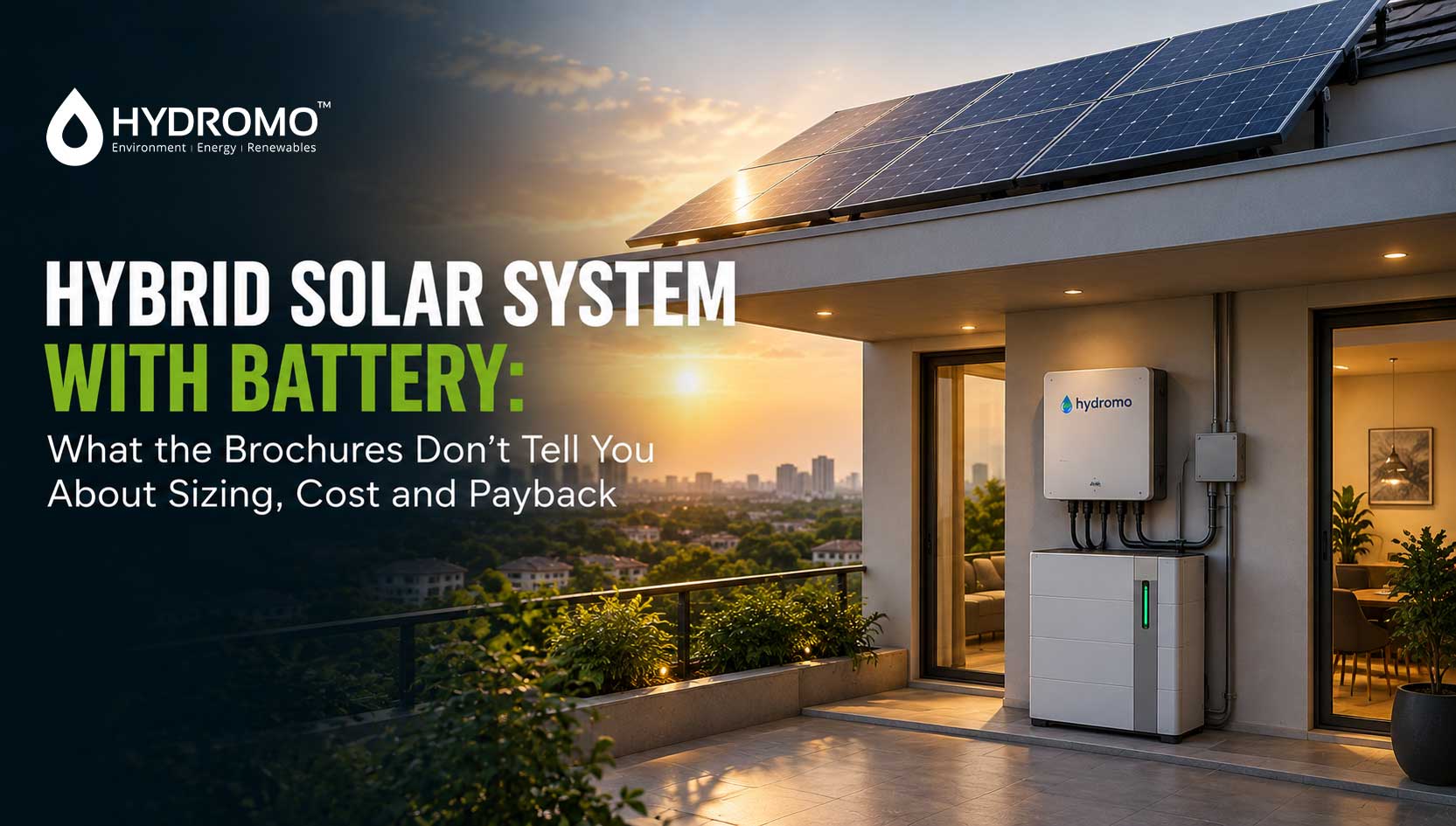
Most hybrid solar system pitches skip straight to the pitch: panels, battery, done, problem solved. What they leave out is the part that actually determines whether the system works for your house, how big the battery needs to be, what it costs to run over ten years, and how long before it actually pays for itself.
A hybrid solar power system combines three things: solar panels, a battery, and a hybrid inverter smart enough to manage both, with the grid sitting underneath as backup. During the day, panels power the house first. Leftover power charges the battery instead of exporting to the grid at whatever rate the utility offers. At night, the battery takes over. Before you get to that stage, though, it’s worth knowing what to check before installing rooftop solar panels in the first place; a hybrid system inherits every one of those same decisions, just with a battery layered on top.
Why Solar and Battery Storage Became the Default Ask
A few years ago, most rooftop solar buyers skipped storage entirely. Grid-tied systems were cheaper, and net metering paid a decent rate for exported power. That math has shifted.
Net metering rules in Telangana and Andhra Pradesh have moved toward lower buyback rates in several categories, so exporting solar for a low rate and buying it back at full price in the evening no longer makes as much sense. Storing your own daytime solar for evening use is now worth more than selling it, which is the real reason solar and battery storage moved from “nice to have” to “makes financial sense.”
There’s an added incentive too. Under PM Surya Ghar Muft Bijli Yojana, hybrid rooftop solar systems integrating battery storage are also eligible for Central Financial Assistance, which brings the combined cost closer to what a solar-only system used to cost on its own.
The Battery Is Where the Real Decision Gets Made
Panels get the marketing attention. The battery is where the trade-offs live.
Lead-acid batteries are the cheapest upfront, but they wear out after roughly 500 to 1,000 cycles. Lithium iron phosphate (LFP) batteries cost more per kWh but routinely last 4,000 to 6,000 cycles, which works out cheaper per year of use once you run the math past year three. Most reputable Indian suppliers have moved to LFP for exactly this reason; it’s safer at high temperatures too, which matters given how solar panels themselves already lose efficiency as they degrade in Indian heat over the years.
Sizing matters more than brand. A 5 kW inverter paired with a 10 kWh battery sounds generous until you add up what’s actually running during an outage: an AC unit, two refrigerators, and a water pump. That load can drain a 10kWh battery in under three hours. Before signing anything, run your actual numbers through a solar sizing calculator instead of going by what the quote sheet assumes.
What a Hybrid System Actually Costs, and When It Pays Back
A solar-only rooftop system typically pays for itself in 4 to 6 years. Add a battery, and that stretches to 8 to 12 years, depending on battery cost and how often outages actually happen in your area. If you want the fuller ROI picture for a larger installation, this breakdown of solar rooftop payback for commercial buildings walks through the numbers most quotes leave out. That’s not a flaw in hybrid systems; it’s just math. If outages are frequent and long, the battery earns its cost through avoided generator running expenses and avoided missed work hours. If your grid is reliable, a solar-only system with a battery added later, once the panels are already paid off, is often the more sensible sequence.
Installation: What It Actually Involves
A hybrid setup needs three things done right: panel mounting sized to daytime load, a hybrid inverter that can manage grid switching and battery charging simultaneously, and battery placement somewhere ventilated and away from direct heat. Installation itself usually takes two to four days once approvals are in place, though the grid approval process can add several weeks depending on the local utility.
The Mistake That Shows Up Most Often
Undersizing the battery to hit a lower quote, then discovering during the first real outage that the fridge and one light barely last the night. A lot of the complaints about why homeowners’ solar panels don’t give the results they expected trace back to exactly this kind of mismatch between what was quoted and what the household actually needs. A proper load calculation, done against your real appliances, is worth the fifteen-minute conversation before you sign anything.
Is It Worth It?
For households with frequent outages, high daytime electricity use, or reduced net metering rates, a hybrid solar system with battery makes both financial and practical sense, and the PM Surya Ghar subsidy makes the entry cost more reasonable than it used to be. For households with reliable grid power, a solar-only system now, with battery storage added later, is often the smarter sequence.
Before comparing quotes, ask for four numbers specifically: battery chemistry, expected cycle life, backup runtime calculated against your actual appliance load, and inverter warranty terms listed separately from the battery warranty. Those four numbers tell you more about long-term value than any brochure will.
Take the Next Step
Not sure whether a hybrid system is worth it for your home?
Run your own numbers first with Hydromo’s free solar sizing calculator, or talk to our solar team for a load calculation based on your actual appliances, not a generic estimate. We’ll tell you honestly whether a hybrid system, a solar-only system, or a solar-plus-battery-later approach makes the most sense for your outage pattern and budget.
Frequently Asked Questions
What is the difference between a hybrid solar system and an on-grid solar system?
An on-grid (grid-tied) system has no battery; it feeds excess power straight to the grid and shuts off during outages for safety reasons. A hybrid solar system adds a battery and a hybrid inverter, so it can store surplus solar and keep running your home during a power cut while still staying connected to the grid for backup.
How much does a hybrid solar system with a battery cost in India?
Cost depends heavily on system size and battery capacity, but hybrid systems generally cost more than solar-only systems of the same panel size because of the added battery and hybrid inverter. Battery chemistry (lead-acid vs LFP) is the biggest swing factor, and eligible households can offset part of the cost through Central Financial Assistance under PM Surya Ghar Muft Bijli Yojana.
How long does a solar battery actually last?
Lead-acid batteries typically last 500 to 1,000 charge cycles, roughly 3 to 5 years of daily use. Lithium iron phosphate (LFP) batteries last 4,000 to 6,000 cycles, often 8 to 10 years, which is why most installers now recommend LFP despite the higher upfront cost.
Can a hybrid solar system run my entire home during a power cut?
Only if the battery is sized for your actual essential load. Most residential batteries are sized to cover lighting, fans, Wi-Fi, refrigerators, and a few essentials, not the full house, including AC units, for an extended outage. Running a proper load calculation before installation is the only reliable way to know what your specific battery will and won’t cover.
Is a hybrid solar system eligible for subsidy under PM Surya Ghar?
Yes. Hybrid rooftop solar systems that integrate battery storage are eligible for Central Financial Assistance under the PM Surya Ghar Muft Bijli Yojana scheme, which helps bring down the combined cost of panels and battery storage for eligible households.
Which is better for a hybrid solar system: a lithium or a lead-acid battery?
Lithium iron phosphate (LFP) is better for most homes despite a higher upfront cost. It lasts roughly 5 to 6 times longer than lead-acid, handles Indian summer heat more safely, needs less maintenance, and works out cheaper per year of actual use once you account for lead-acid’s shorter replacement cycle.