
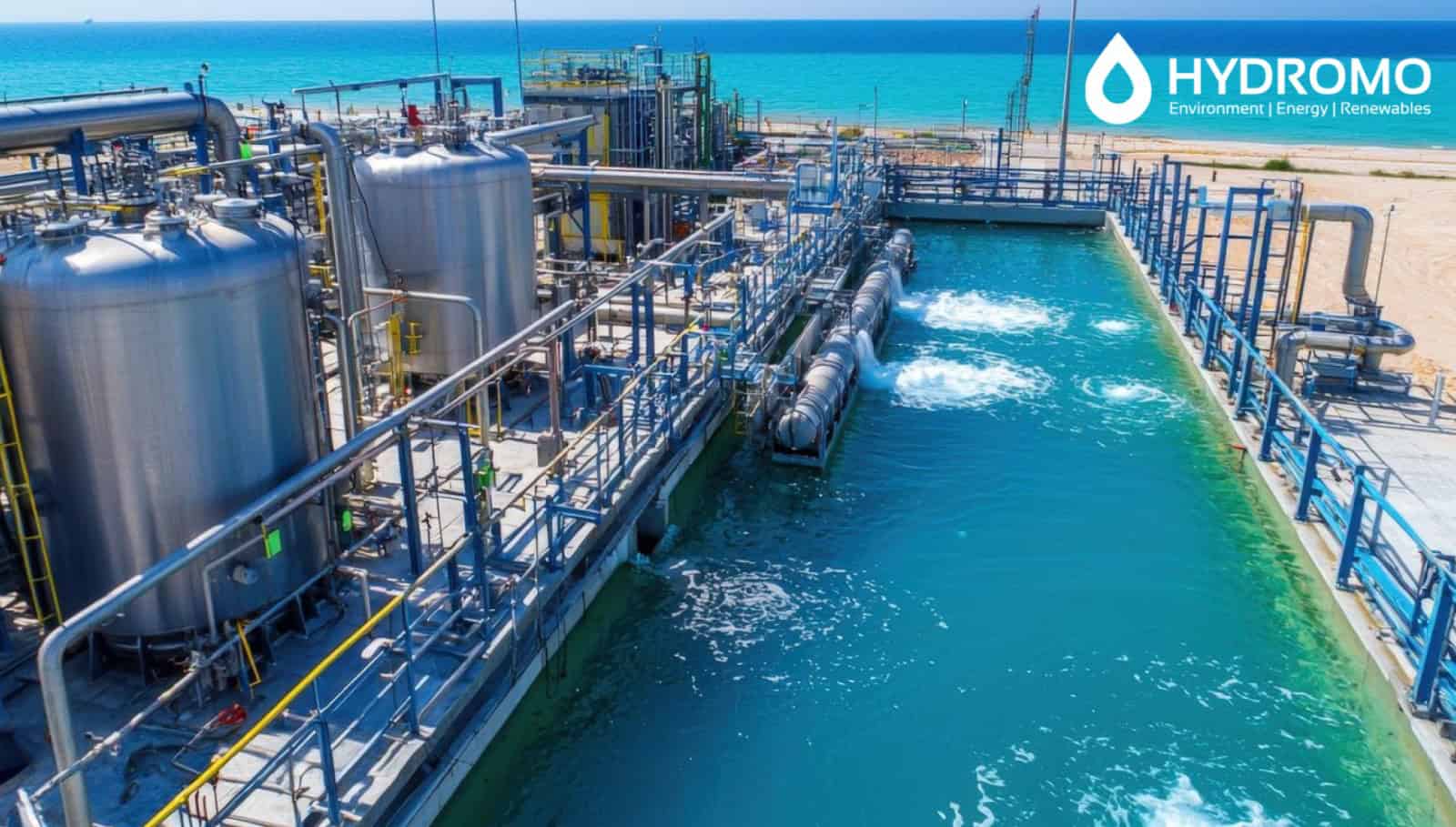
Desalination Plants for Industries
The lifeblood of industry is water, yet in many areas, there is a shortage of freshwater that can be relied upon. This is addressed by desalination plants, which convert salty or brackish seawater or groundwater to clean water that can be used. These systems make the factories work, the power plants work, and the production lines remain the same. In industries such as oil and gas, manufacturing, and food processing, desalination is important to make smart investment choices.
What is Desalination?
To produce fresh water of high industrial standards, desalination eliminates dissolved salts, minerals and impurities in saline water. The average concentration of total dissolved solids (TDS) is approximately 35,000 mg/L in seawater and 1,000 to 10,000 mg/L in brackish sources. An effective plant will purify the water to levels less than 500mg/L, which are ideal in boilers, cooling towers, chemical operations, or the production of products.
Desalination is a solution that is drought-proof in coastal or dry regions. It helps decrease reliance on supplies in the municipalities and ensures against price increases or limitations. The industrial plants that are today are efficient, reliable and can be easily integrated with the current operations.
How the Desalination Process Works
A desalination plant is equipped with an efficient, multi-stage process that is environmentally friendly. It begins with the intake, whereby saline water is extracted from the sea or wells through screened systems with minimal disturbance of marine organisms. Pre-treatment follows and removes particles, adds coagulants and balances chemicals to ensure that it does not foul.
The main step involves the elimination of the salts by the selected technology:
- Post-treatment: the fresh water is remineralised, pH-balanced and disinfected to prevent the corrosion of the pipes.
- Lastly, the concentrated brine is dealt with in a responsible manner, either by diluting or by the zero-liquid-discharge system to comply with regulations.
- Energy recovery equipment re-utilises pressure and reduces power consumption, which is crucial to 24/7 operations.
- Output is maintained by automation and sensors with minimum human involvement.
Key Desalination Technologies explained
The selection of the appropriate technology will be based on your feed water, the cost of energy, and the size of the plant.
- Most industries use Reverse Osmosis (RO): The water is forced through semi-permeable membranes by high-pressure pumps that exclude salts and allow pure water to pass through. It is scalable, energy-efficient and modular and can have a recovery rate of up to 50% on seawater.
- Multi-Stage Flash (MSF) or Multi-Effect Distillation (MED) is a type of heat-based technique which evaporates and condenses water with the help of heat, usually waste heat generated by power plants. They can also be fed high-salinity feeds, but they use more energy.
- Electrodialysis is more appropriate for lower-salinity brackish water, and solar or forward-osmosis can be a favourable choice for locations concerned with sustainability.
The balance of cost, footprint, and performance allows RO to power more than 60% of the world.
Benefits and Advantages of Desalination?
- Desalination has a number of viable advantages to industries.
- It provides a consistent water supply that is independent of climate and is not affected by droughts or limitations.
- Its production is capable of being cleaner than traditional sources, scaling, corrosion and equipment wear are minimised. Systems can be scaled, i.e. you can start small and expand.
- It also helps to meet sustainability goals since it releases freshwater to the population and helps to meet regulatory levels.
- Although it will cost more to start up, long-run savings of a reliable supply and less freshwater purchases will generate healthy returns in the long run.
Choosing the right Desalination System for your Needs
The initial step in choosing the most appropriate system is to examine your feed water: what is the TDS, temperature and contaminants.
Customised to your needs and future development, 1,000 or 100,000 cubic meter per day. The largest continuing cost is energy, and therefore, give priority to recovery equipment and renewable integration.
Take into account such site factors as access to the coast, rules of brine disposal, space, and permits. It is also important that it should be reliable- choose suppliers which have good warranty, monitoring and local service. The pilot testing and feasibility analysis are conducted at an early stage to avoid costly mistakes.
As an alternative, Hydromo Desalination Solutions offers tailor-made and high-performance systems, which are tailor-made to suit industrial needs. They have a pragmatic engineering that integrates the latest technology and low-cost design which places water security in a competitive advantage.
FAQ
Q1. What is Desalination?
A. The process of removing all the dissolved salts, minerals and other contents of seawater or brackish groundwater to get the pure fresh water that industries can actually utilize is what is basically called desalination.
It removes the total dissolved solids (TDS) of approximately 35,000 mg/L of seawater down to less than 500mg/L- excellent in boilers, cooling towers, chemical mixing or even in the final product.
Q2. How is the desalination in industrial plants?
A. The desalination process in a real plant of industry is carried out in five simple steps.
- You begin with the saline water being drawn in using screened intakes which safeguard marine life. Then there is pre-treatment in which you filter junk and add chemicals as a preventive to foulage.
- Then there is the salt-removal process, the post-treatment, which involves remineralizing, adjusting the pH, and disinfecting the water to make sure that it does not dissolve your pipes.
- Finally, you dispose of the remaining brine. It has energy recovery technology to maintain low power use, and is completely automated to maintain a constant output throughout the day.
Q3. What are the major Desalination Technologies in industries?
A. The two largest are Reverse Osmosis (RO) that is the most popular in most factories since it is efficient and simple to scale and thermal processes such as:
- Multi-Stage Flash (MSF) or Multi-Effect Distillation (MED) that utilize heat to evaporate the water.
- Electrodialysis of less dense brackish sources and some newer solar or forward-osmosis installations of greener locations.
As of today RO manages more than 60 percent of the industrial capacity of the world – it simply offers the optimal combination of cost, size and performance to use in daily life.
Q4. What are the benefits of desalination to industries?
A. The actual victories are so obvious.
- You receive an inexhaustible supply of water even during droughts or city conservation.
- The water is cleaner than the majority of municipal sources, hence you find less scaling, less corrosion and your equipment lasts longer.
- The systems are scalable – begin small and expand when you need to.
- It also assists in getting those sustainability boxes and is a way of ensuring that you remain within the regulations.
- The initial investment may be costly, but in the long run you save a lot of money by not pursuing fresh water that is costly.
Q5. What to do to select the appropriate Desalination System to use in industries?
A. You need to look at what you actually have in your feed water; its TDS, temperature and all that is floating about it. Then calculate the amount of water you require today and in five years time. The largest portion of the running costs is consumed by energy costs, and thus, emphasis should be on systems that have high recovery capabilities and renewable solutions. Local regulations on the disposal of brines, space, and permits should not be forgotten. Choose a supplier which really provides good warranties and local service. A pilot test and a complete cost analysis at the start spares you the costly headaches later.
Q6. What is the purpose of desalination plants on industries?
A. Straight forward – because fresh water is becoming increasingly difficult and costly to access in most locations. With your own reliable source of high-quality process water, a desalination plant keeps it dependable regardless of the weather or city. It eliminates the chance of shutdowns, satisfies your production with tight quality requirements and is able to expand without having to plead with your municipality to allocate more water to you or charge you a fortune.
Q7. What are the differences between Reverse Osmosis and thermal desalination technologies?
A. Reverse Osmosis forces water across membranes with pressure- it consumes much less energy and it is highly adaptable in various plant sizes.
Thermal processes heat the water with heat (frequently the waste heat of power plants) and would be better with super-salty feeds, but tend to be more expensive to operate.
The choice of RO is made by most industries unless they have a ready source of cheap heat.
Q8. To what extent are contemporary desalination plants efficient in industries?
A. Plants nowadays are not that dumb as they were before. Energy recovery gadgets capture and recycle pressure to ensure that you do not waste energy. RO systems in particular have reduced their energy consumption by a significant margin, and there are many new systems combining a solar or other renewable. This makes desalination much more feasible and cost-effective than it was a decade ago to a factory that operates 24 hours a day.
Q9. What is the purpose of pre-treatment during the process of desalination?
A. Pre-treatment is the truth-teller. It kills all the particles, organics, and things which would soon destroy your membranes or scale them. Do it right and you have a system that will run better, last longer and have fewer costs to operate. Skip or skimp on it and you’ll be dealing with frequent cleaning and higher bills – not something any plant manager wants.
Q10. What can Hydromo Desalination Solutions do to assist industries?
A. Hydromo Desalination Solutions constructs tailor-made plants, constructed to fit actual industrial life. They combine the latest technology with simple and sense-common sense engineering in a way that you do not over spend on performance. With energy-saving designs, complete continuous assistance, they can turn the problem of scarcity of water into a non-issue and provide you with a real advantage in water-deprived regions.