
Solar Panels for Industries
Industrial electricity bills rarely go down on their own, daytime shift loads, HVAC, compressors and process equipment keep pulling from the grid at commercial tariff rates. A correctly sized rooftop solar system shifts a large part of that daytime load onto free sunlight instead. Hydromo designs and installs industrial solar systems around your site's roof, load pattern and consumption, we don't start from a catalogue.
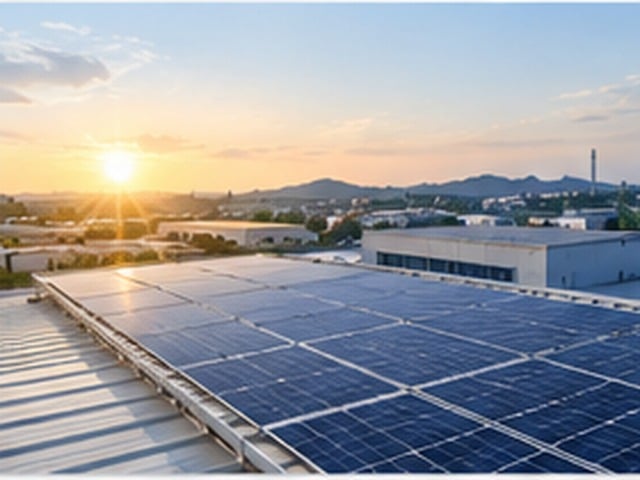
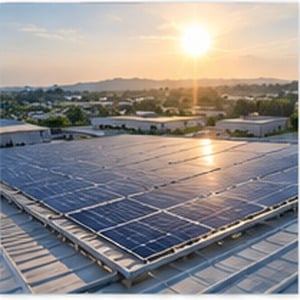
Solar output rises through the same hours industrial tariffs are highest, the overlap every Hydromo system is sized around.
A Daytime-Consumption Problem, Not Just an Electricity Bill
Most factories don't have an electricity problem so much as a daytime-consumption problem. Manufacturing units, warehouses and process plants draw their heaviest load between 9 AM and 6 PM, machinery running, compressors cycling, HVAC holding temperature, which happens to be exactly when solar generation peaks.
Rooftop solar for industries works because that overlap is so direct. Panels installed on factory sheds, warehouses, or ground-mounted arrays on unused land generate power during working hours, and that power gets used almost as fast as it's produced, cutting into the grid bill before a single unit is drawn. The complication is that industrial rooftops aren't uniform, a textile unit with an old asbestos-sheet roof needs a different mounting approach than a pharma facility working around GMP clean-room constraints, and a cold-storage warehouse with heavy insulation changes the structural math again. Hydromo starts with a site assessment before recommending a system, not the other way round.
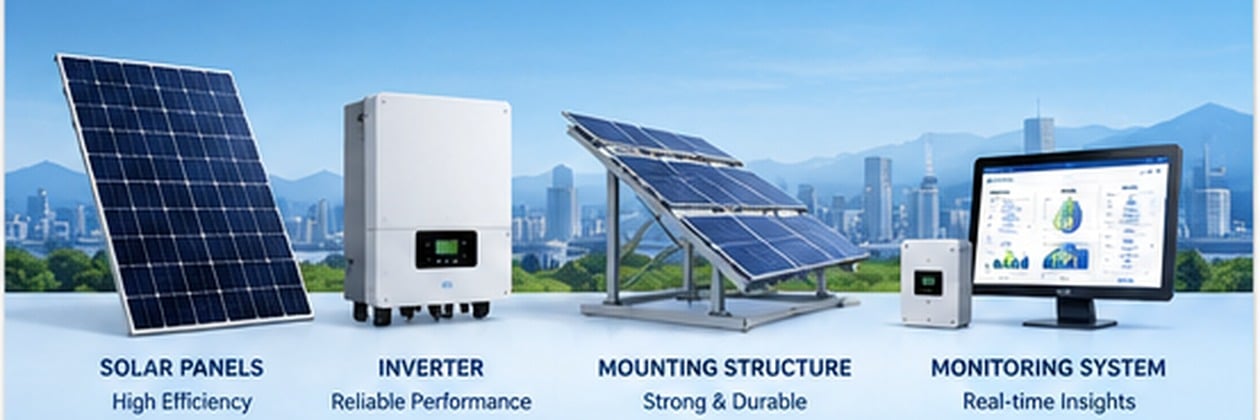
What Goes Into an Industrial Rooftop System
Mono-PERC & TOPCon Panels
Mono-PERC panels use a rear passivation layer to reflect unused light back into the cell. TOPCon panels add a passivated contact layer that generally gives a better yield in high-heat conditions, which matters on Indian factory roofs that run hot most of the year.
DCR vs Non-DCR Panels
Panels assembled in India (DCR) are required when a system is connected through a net meter that exports surplus power to the grid. Non-DCR panels are generally used for behind-the-meter systems, sized to consume their own generation without exporting.
String Inverters & MPPT
The DC power the panels generate has to be converted to AC before it can run industrial equipment. String inverters track each panel string's maximum power point to draw the most usable power out of varying sunlight across the day.
Mounting Structures
Sheet roofs, RCC roofs and ground-mount or carport structures all need different structural approaches, accounting for existing roof load capacity, wind loading and how the panels will get accessed for cleaning later.
How Hydromo Industrial Solar Works
What We Assess First: Roof and Load
Our team reviews your electricity bills, load pattern, roof type and available area to understand what's actually feasible on your site.
A Structural and Shadow Check
The roof or ground-mount area is checked for load-bearing capacity, shading from adjacent structures and orientation, since these directly affect output.
Sizing the System to Match Your Load
Based on the assessment, we design a system sized to your consumption pattern, matching daytime load rather than just maximising rooftop coverage.
Purchase, Lease, or PPA, You Decide
Depending on your capex position, we work through whether a direct purchase, lease, or a power-purchase-style arrangement fits your business better.
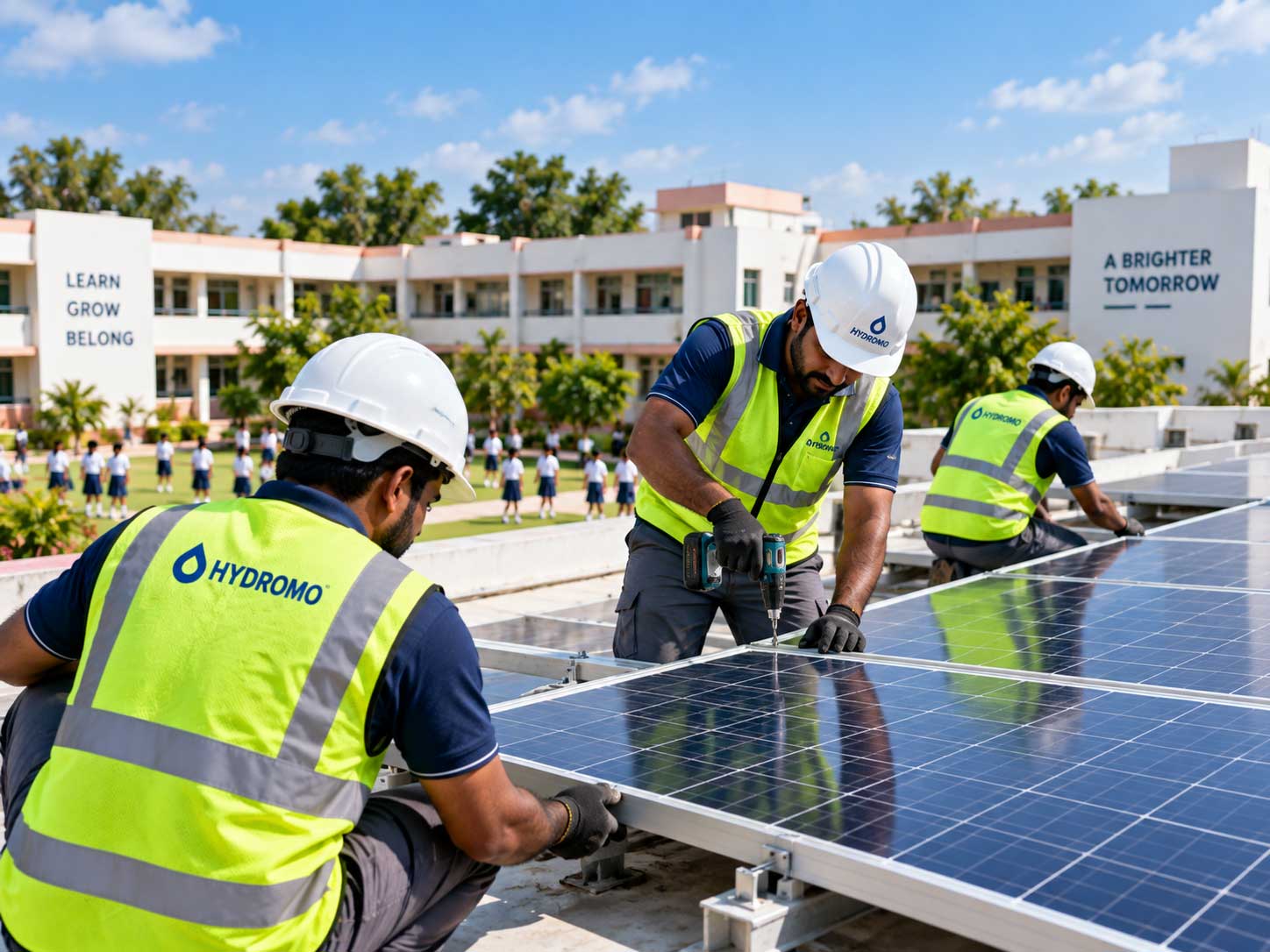
Installation and Commissioning
Panels, inverters, mounting structures and cabling are installed and tested before the system is handed over and connected.
What Happens After Handover
Ongoing generation monitoring and scheduled maintenance keep the system performing at the level it was designed for.
Sized to Your Load, Not Your Roof Area
Sized to Your Load, Not Your Roof Area
Systems are sized against your actual load curve and roof constraints, not a generic per-square-foot calculation.
Structural Compatibility Check
Every roof is assessed for load capacity and wind exposure before mounting design is finalised, important for older industrial sheds.
Choose How You Pay for It
Direct purchase or lease-based arrangements can be structured depending on your capital position.
Remote Generation Monitoring
System output can be tracked remotely so underperformance is flagged early rather than discovered on the next electricity bill.
Maintenance Fits Your Shift Schedule
Panel cleaning and inverter checks are planned around your operating hours instead of interrupting production.

What It Means for Your Facility
Reduces Daytime Grid Dependence
Cuts into the grid bill during working hours, when industrial tariffs are typically highest.
Protects Against Rising Tariffs
Fixes a portion of your energy cost against a resource that doesn't have a fuel bill.
Supports RPO and Sustainability Reporting
Helps industrial units move toward renewable purchase obligation targets and internal sustainability commitments.
Reduces Roof Heat Load
Panels shade the roof surface, which can reduce heat transfer into the building below, useful where HVAC or sensitive processes sit directly under the roof.
Minimal Operational Disruption
Once commissioned, the system runs with scheduled maintenance rather than day-to-day intervention.
Depreciation Benefit
Solar assets are eligible for accelerated depreciation under current tax provisions, worth discussing with your finance team alongside the project numbers.
Where This Works
Manufacturing Facilities
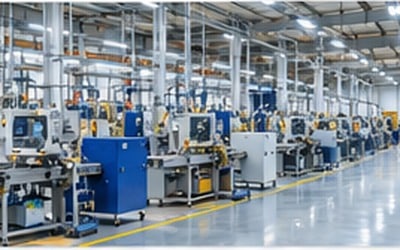
Factories with sheet or RCC roofs running daytime shifts, where solar output lines up directly with machine-hour load.
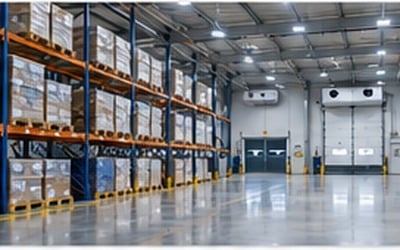
Warehouses & Cold Storage
Large flat roof areas suited to bigger arrays, often paired with heavier daytime cooling loads.
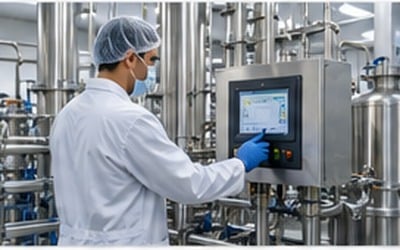
Pharmaceutical & Process Units
Facilities where roof space is available but structural and shading constraints need careful assessment before sizing a system.
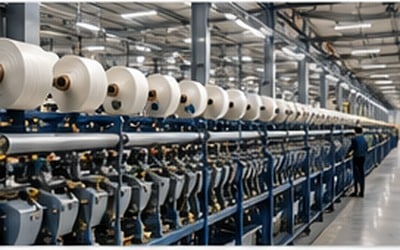
Textile & Heavy Industry
Units with high daytime energy draw from machinery, where even partial solar offset materially changes the monthly bill.
Capacity & Customization
There's no single "right size" for an industrial solar system. What it needs comes from your average daily consumption, peak load, available roof or ground area, roof structural condition, and whether you plan to expand operations later. A 200 kW roof and a 200 kW load don't necessarily need the same system design. Hydromo assesses these factors on-site and sizes the system to what your facility will actually use, a bigger roof can usually hold a bigger array, but that's not the same question as what you need it to produce.
Selected Hydromo Projects

AVANTEL
HYDERABAD & VIJAYAWADA

SARMA CYLINDERS
VIJAYAWADA
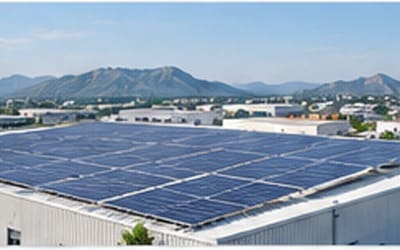
BIO MED
VIJAYAWADA
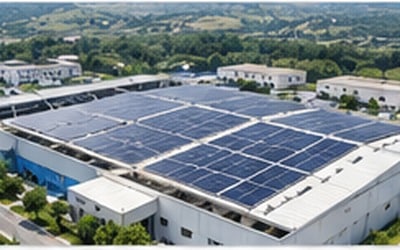
BHUJ AIRPORT
Bhuj, Gujarat
One Team, Start to Finish
Site-First Engineering
System design starts from your roof and load data. What gets installed is specific to your building, not pulled off a shelf.
Structural Diligence
Roof and mounting assessments are treated as a design input, not a formality, particularly relevant for older industrial buildings.
One Sustainability Partner
Hydromo also works in water treatment and recycling for industrial clients, so energy and water sustainability planning can sit with a single technical partner instead of two separate vendors.
After-Installation Support
Monitoring and scheduled maintenance continue after commissioning, not just through the warranty period.
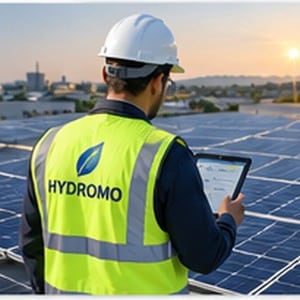
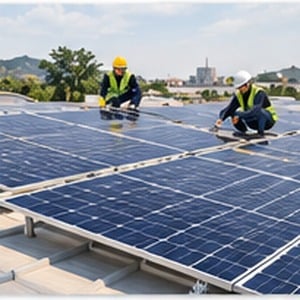
A Few Moments From Past Installations
Questions For Us
What is an industrial solar system?
It's a rooftop or ground-mounted solar power system sized to offset a factory or commercial facility's electricity consumption, typically during daytime operating hours.
How much roof space does an industrial solar system need?
It depends on the system size and panel wattage. Roughly, higher-capacity systems need proportionally more area, but exact area requirements depend on panel efficiency, roof layout and shading, best confirmed during a site visit.
Can solar cover 100% of my factory's electricity needs?
That comes down to how your daytime load compares with what your roof can actually hold. Many industrial units offset a meaningful share of daytime consumption rather than the full load, since night-shift or continuous-process operations still draw from the grid unless paired with storage.
Does an old factory roof need reinforcement before installing solar?
Sometimes. Older sheet or RCC roofs are checked for load-bearing capacity and wind exposure as part of the assessment. If reinforcement is needed, that's factored into the project cost and timeline upfront.
What's the difference between a purchase model and a lease/PPA model?
In a direct purchase, you own the system and its output from day one. In a lease or power-purchase-style arrangement, a third party owns and maintains the system, and you pay for the power it generates, useful if you'd rather avoid upfront capital expenditure. [VERIFY SPECIFICATION: which models Hydromo currently offers]
How often does an industrial solar system need maintenance?
Panels need periodic cleaning to maintain output, and inverters and connections need scheduled checks. The exact frequency depends on local dust levels and site conditions.
Is net metering required for an industrial solar system?
Not always. Net metering is relevant if you expect to export surplus power to the grid. Many industrial systems are designed behind-the-meter, sized so that generation is consumed on-site rather than exported.
How long does an industrial solar installation take?
Timeline depends on system size, structural work if any, and approvals required. It's assessed and communicated after the site survey rather than quoted as a fixed number upfront.
Considering Solar for Your Industrial Facility?
Send us your electricity bills, roof details and consumption pattern. Our team will assess feasibility and come back with a system sized to what your facility actually uses.