
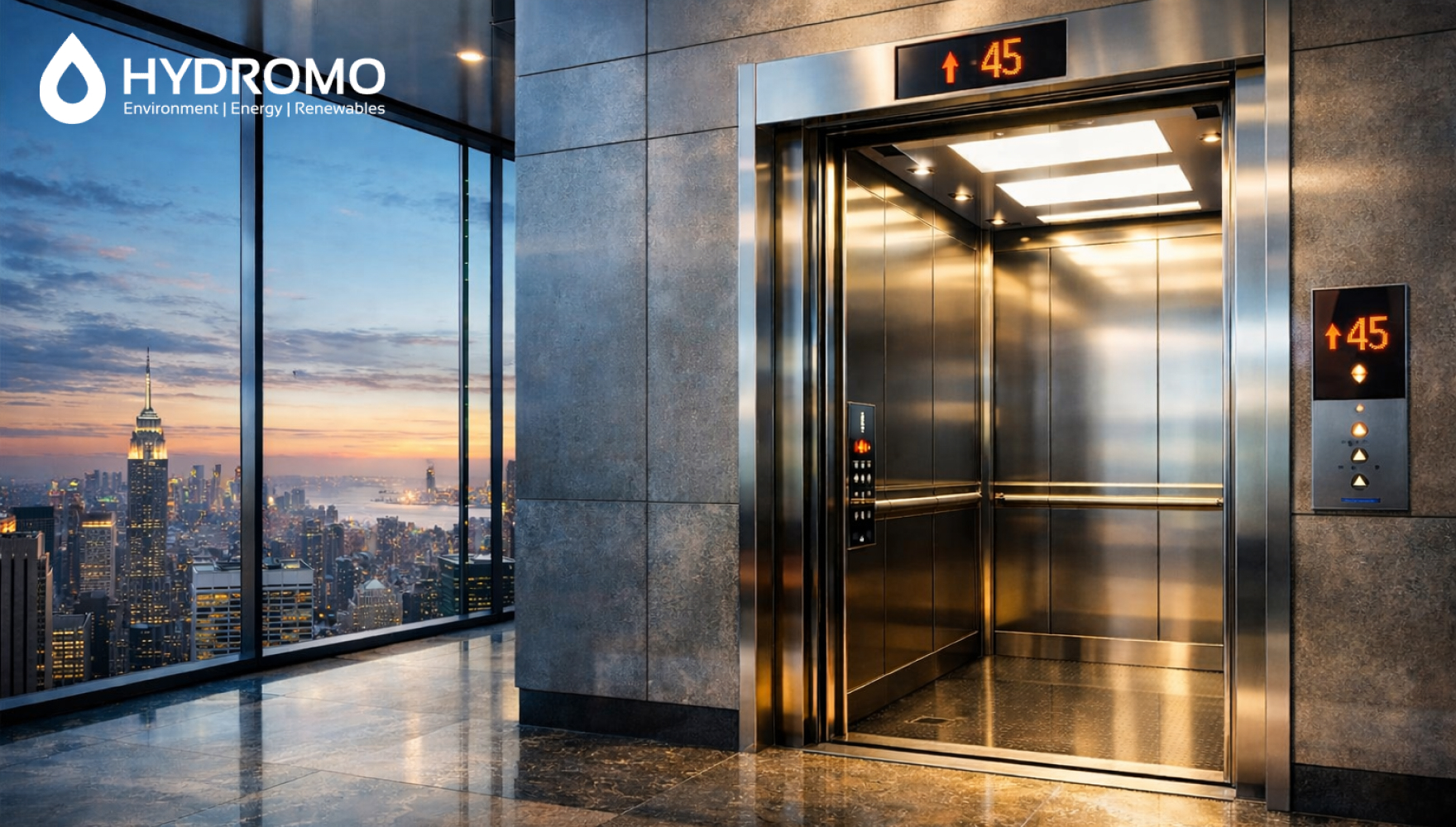
Hyderabad, which has more than 1500 high-rise buildings, is quickly becoming a vertical metropolis with high-rise buildings and efficient elevators being the bloodline of urban life. With the city adopting the skyscraper as the residential, commercial and mixed-use development, the planning of elevator for high rise building to promote smooth movement, provide safety and sustainability has become a critical issue.
Essentials of Elevator Planning.
Proper elevator systems of high-rise buildings begin with traffic analysis to accurately foresee the time of peak use, e.g., morning rush hours or when the building must evacuate the occupants in case of an emergency. This is done by modelling the flow of passengers, calculating the number of elevators (at least two per floor by building code recommendations such as the Hessian high-rise rules), and considering the height of buildings, the occupied type and the flexibility with future renewal. The planners in the case of Hyderabad should focus on the 2-car, 4-car, or 6-car configurations to balance space, speed, and capacity taking into account the number of buildings (1500 and above).
The important dimensions of the shafts, the size of machine rooms, and the required details such as elevators of the firefighters with stairs access are the important dimensions. Vendor-independent designs are also pre-planned to support different brands and optimize the load, speed and energy efficiency.
The Choice of the Right Elevator.
The selection of elevators to high buildings must be based on the use of buildings: residential towers should have short waiting periods and emergency capacity and offices should have high volumes of transport. The speed factor comes into play: the faster the elevators (e.g. high-speed single-deck or twin arrangement), the less there will be required in total, particularly in buildings over 250 meters. Destination Control Systems (DCS) also increase efficiency with passengers being clustered on a floor thereby reducing the time of traveling by up to 50 percent.
In India, building standards require service lifts on freight and details on residential and commercial requirements, affecting plans as 3-car to 8-car banks. Schindler focuses on assessing the traffic trends, accessibility, and maintenance in the long-run to suit best.
| Factor | Residential High-Rise | Commercial High-Rise |
| Elevator Count | 2-4 per core, focusing on peak homebound traffic | 4-8+, prioritizing 12-15% handling capacity |
| Speed | 1.5-3.5 m/s for comfort | 4+ m/s for efficiency |
| Special Features | Firefighters’ lift, vestibules | DCS, high-capacity service lifts |
High-Rise Elevatoring is a challenging task.
High-rises are characterised by the problems of long transport ways, the lack of space to put shafts, and rational circulation without overbooking. The specialists on traffic flow should work in collaboration with the architects and engineers at an early stage so as to estimate the population, peak demand and the evacuation requirements. The increasing skyline of Hyderabad requires adaptation of old building or change of use (e.g. residential to hotel) with flexible plans to maintain its value.
Some of the modern innovations encompass the use of modular elevators that expand during the construction process and efficient models that consume less energy. Additional Indian guidelines emphasise home lift and smart solutions such as different speeds in different zones.
Sustainable and Future-Proof Advice.
Implement green technology such as regenerative drives to reduce energy by one-third and strategize EV charging in lobbies. Best practices: always do simulations in the early stages, alternate with different types of elevators on the structures less than 250m high and design them universally so they can be upgraded without difficulty. To the developers of Hyderabad, it is enough that they should match local codes but look at future expansions of 2026+, so that the building has elevators as the blood vessels.
The approach is strategic because it is able not only to satisfy the day-to-day needs, but also raise property value in a city where the vertical city is soaring.
In the booming high-rise industry in Hyderabad, Hydromo Lifts is offering customised high-rise elevators, which will be incorporated with water and energy systems in order to have sustainable buildings. Our products also cover professional planning, energy-saving installation, servicing, and custom upgrading, making our services reliable and environmentally friendly to your projects.