
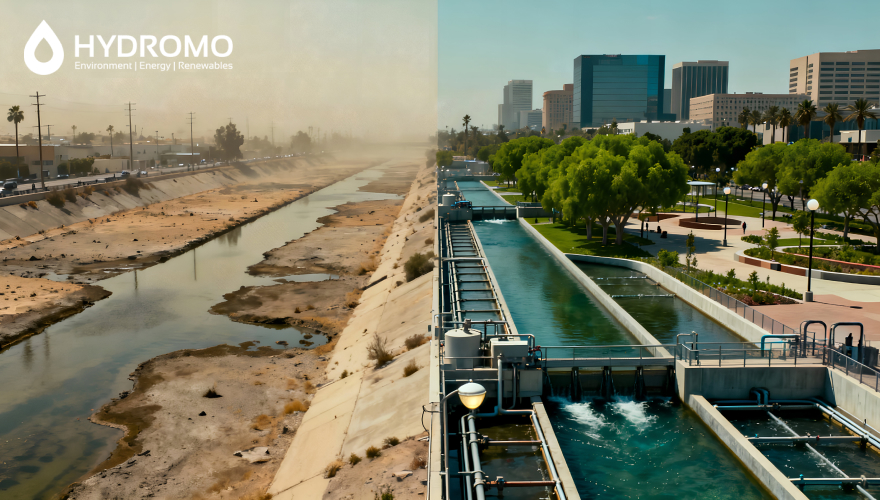
The Urban Water Crisis: What Is Causing It?
Urban sprawl, overexploitation of groundwater, climate change and lack of proper water infrastructure contribute to the urban water crisis. Cities drain more water than can be replenished by natural systems, causing a a shortage of water and diminishing groundwater.
Key causes include:
- Groundwater Over-pumping of groundwater.
- Poor rainwater utilisation
- Bursting and inefficient supply.
- Increasing population and urbanisation.
Modern Water Solutions for Cities?
The contemporary water solutions help the cities to collect rainwater, recharge the groundwater, maximise the distribution and reuse of water. These types of systems reduce dependence of the water systems on external sources of freshwater and improve water security in the long run.
Core solutions include:
- Rainwater harvesting systems.
- Borewell recharge systems
- Smart pressure systems and smart pumps.
- Water recycling and reuse
What Is Rainwater Harvesting and Why Is It Important?
Rainwater harvesting refers to the method of collecting and storing rainwater in the ground, which is then recharged.
Why it matters for cities:
- Eliminates reliance on tanker, municipal water.
- Stops flooding and waterlogging.
- Enhances the water level in the ground.
- Lowers water costs
Rainwater harvesting transforms rainfall that is seasonal to a source of water that is sustainable.
What Does Recycling of Water Play in the Water Conservation of Cities?
Water recycling purifies the water recycled and is recycled in other non-drinkable applications such as landscape, flushing, cooling and even industrial applications.
The rationale behind cities preferring to recycle water:
- Reduces freshwater demand
- Lowers sewage discharge
- Preferred green city development.
- Enhances water resilience
Why Integrated Water Management Is the Future of Cities.
Integrated water management involves the use of harvesting, recharge, pumping, treatment, reuse and automation within one efficient system.
This approach helps cities:
- Improve water efficiency
- Achieve sustainability and compliance.
- Reduce operational costs
- Infrastructure Build climate-resilient infrastructure.
How the cities are being saved by Modern Water Solutions.
The contemporary water solutions rescue the urban areas by transforming the emphasis of extraction to conservation. Cities have started managing the available resources more intelligently, efficiently and cleanly instead of having to source more water.
This transition ensures:
- Long-term water security
- Environmental protection
- Urban development sustainability.
The way Hydromo contributes to the water-smart cities.
Hydromo offers end-to-end water management systems that enable cities, buildings and industries to shift to water scarcity to sustainability. Hydromo provides future-proof water infrastructure with knowledge in the areas of rainwater harvesting, bore recharge systems, smart pumps, pressure systems and integrated water solutions.
Hydromo is not only responsible for managing water, but also for conserving it, preserving it and making it live through generations in cities.
FAQs
1. What is the water crisis of the urban circle?
Urban water crisis is the increasing scarcity of water in cities; this is caused by the depletion of groundwater, rapid urbanisation, climate change, and ineffective water management systems.
2. Ways of conserving water via modern water solutions?
The contemporary water solutions save water by collecting rainwater, recharging groundwater, reusing wastewater that has been treated using smart pumps and reusing water.
3.Why would the cities need to harvest rainwater?
Rainwater harvesting assists cities in limiting the reliance of the cities on outside water sources, averts flooding, enhances groundwater quality, and diminishes the general water intake.
4. What is recharge through a borewell, and why?
Borewell recharge: It is the procedure of channelling filtered rainwater to underground water bodies in an effort to replenish groundwater and rejuvenate available borewells.
5. What are the benefits of using smart pumps in managing water?
The pumps are smart, controlling the flow of water and pressure automatically, thereby minimising energy consumption, wastage of water, and efficient distribution within buildings.
6. Is it possible to use recycled water in urban areas?
Yes. The water that is treated and recycled is safely utilised in non-drinking purposes like flushing, landscape, cooling, and industrial use.
7. What is integrated water management?
Integrated water management is a type of water management that integrates rainwater harvesting, groundwater recharge, pumping, treatment, reuse and automation to form one efficient system.
8. What are the ways that modern water solutions contribute towards sustainable cities?
The modern water solutions assist cities in minimising the amount of freshwater, safeguarding groundwater resources, decreasing operational expenses, and constructing climate-resilient infrastructure.
9. What is the Hydromo contribution to water conservation?
Hydromo provides a combination of water management systems such as rainwater harvesting, bore recharge systems, smart pumps and pressure systems, which allow sustainable water consumption in the urban areas.
10. In India, do we have rainwater harvesting systems which are compulsory?
New buildings and other developments of large developments are required to harvest rainwater in most states and cities in India as part of water conservation policies.