
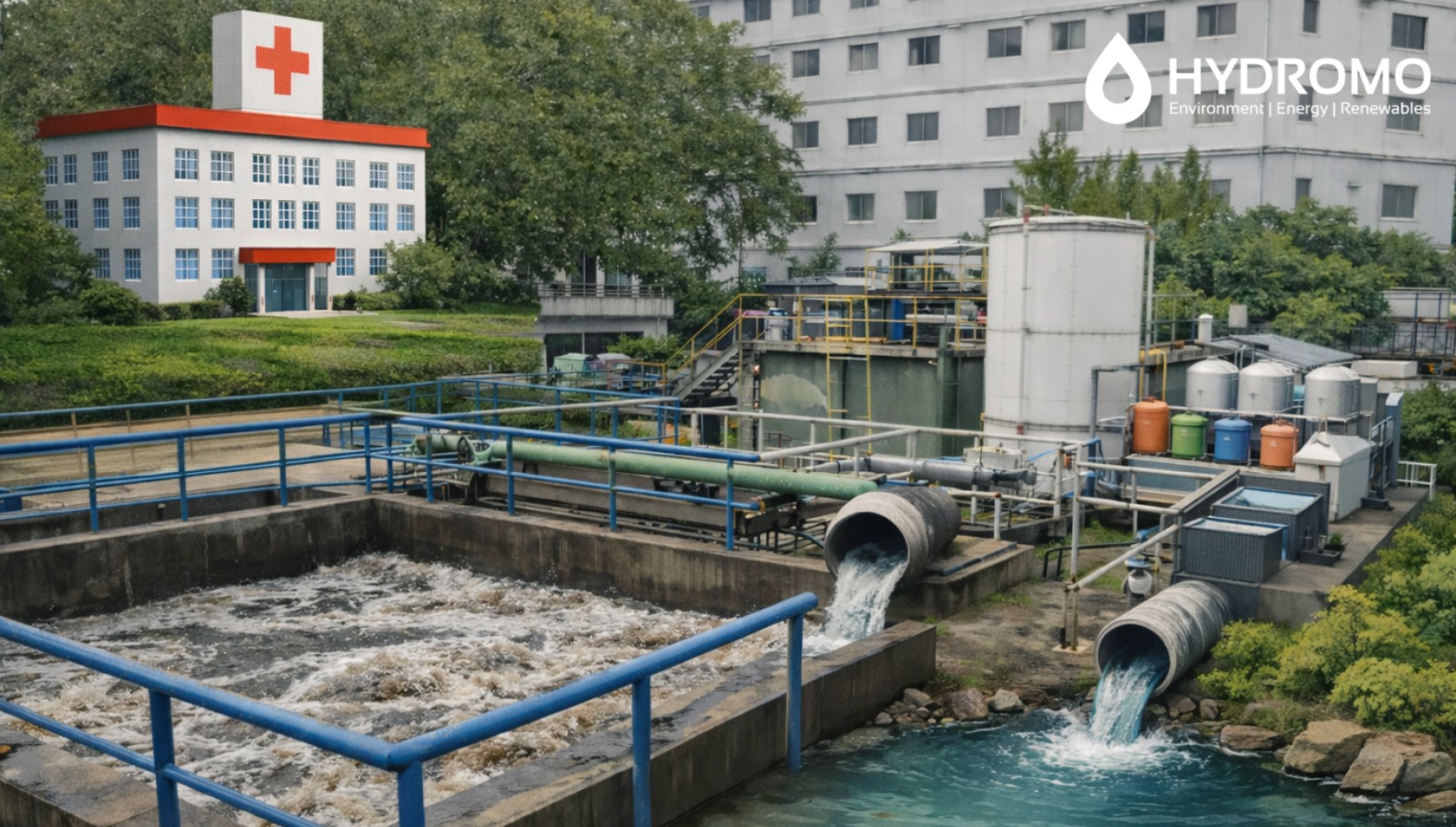
The hospitals also present a special case of wastewater as they produce between 500-1000 liters of wastewater on a daily basis, based on patient care and medical procedures. STP and ETP in hospitals are required to guarantee regulatory compliance, water reuse, and protection against antimicrobial resistance (AMR).
Hospital STP and ETP.
Sewage Treatment Plants (STP) treat the hospital wards, toilets, kitchens, laundries, and administrative section of the facility. They eliminate organic matter, solids and pathogens by using biological processes such as screening, sedimentation and aerobic digestions after which UV or chlorination is done to enable safe reuse. The effluent that is treated in ETP is high-risk effluent that includes the diagnostic labs, pharmacies, operation theaters, and research units which comprise the pharmaceuticals, disinfectants, heavy metals, and antibiotics. ETPs are neutralized by applying coagulation, membrane filtration, activated carbon and advanced oxidation before discharge. CPCB and NGT require hospitals of 10 + beds, and implement BOD of less than 30mg/L, COD less than 250mg/L, TSS less than 100mg/L, and pH concentrations.
The reason Why Hospitals require Dual Systems.
ICUs, dialysis, and diagnostics (and all other types of hospital wastewater) are known to increase the volume of hospital wastewater in the range of 100,000 liter per day and often higher which is much more than a residential system can handle. Un-treated lab and pharmacy effluents contribute to AMR by releasing antibiotic residues into the waters that promote resistant superbugs which pose a threat to human health. STPs facilitate 30-50 percent flushing, gardening, cooling towers, and HVAC reuse to deal with the water shortage faced in India. Their combination helps them to gain NABH/JCI accreditation, prevent fines or closures, and develop sustainability credentials under more stringent control.
Treatment Processes at a Glance
| System | Primary Treatment | Secondary Treatment | Advanced Treatment | Hospital-Specific Design |
| STP | Screening, sedimentation | Aerobic/anaerobic digestion | UV, ozone, chlorination | Compact for variable OPD/IPD loads, odor-free |
| ETP | Coagulation, flocculation | Membrane filtration, carbon | Oxidation processes | High COD/BOD tolerance, chemical-resistant, audit ports |
Modular prefabricated units fit tight urban hospital spaces, supporting zero-liquid-discharge (ZLD) goals.
Core Benefits for Hospitals
Health Safety: Minimizes the transmission of pathogens to the staff, patients, and communities.
Environmental Protection: Eliminates ground water and surface water pollution.
Cost Savings: Reduces freshwater/ tanker dependency by 40 percent, reduces long term costs.
Compliance: PCB compliance will be ensured and will not result in fines and inconveniences.
Reputation Boost: Strengthens ESGs and green-hospital.
The Steps in hospital implementation.
Carry out wastewater audits to map volumes and contaminants by bed.
Select prefab and civil systems 50-500 KLD based on hospital size.
Install IoT real time data submission PCB monitoring.
Contract certified partners to do set up, staff training and maintenance.
Path Forward for Hospitals
STP/ETP integration is not an appendix, but a fundamental infrastructural component, as hospitals become more open to environmental scrutiny because of expansion. These systems not only protect the care that is given to the patients, but also fight AMR, making the hospitals pioneers of sustainable healthcare provision.