
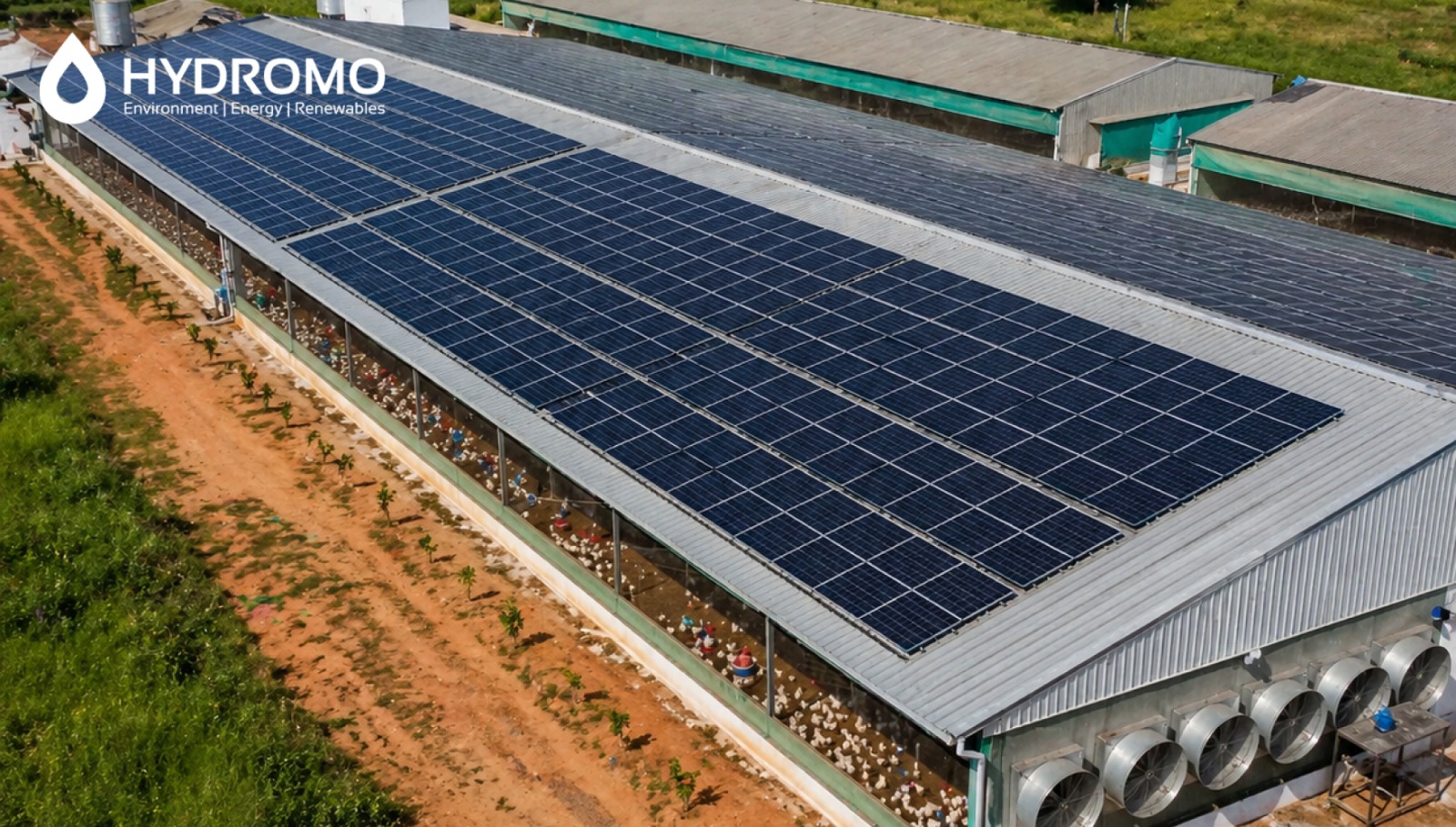
Running a poultry farm is tough on power. Those ventilation fans run almost round the clock, heaters or coolers work hard to keep the temperature right, plus lighting and automatic feeders — everything adds up fast. And with electricity rates climbing every year, your margins get squeezed tighter and tighter.
That’s exactly why so many farmers in India and overseas are putting solar panels for poultry farms on their sheds these days. I’ve walked through farms where they cut their power bills by 50-80% after switching. The long flat roofs on poultry houses are just perfect for commercial solar panels. Best part — you don’t lose even one inch of your valuable land.
Key Benefits of Solar Solutions for Poultry Farms
Solar energy for poultry sheds isn’t some fancy green idea. It delivers real advantages you feel every single day on the farm.
Massive Reduction in Operating Costs: Daytime is when your fans and cooling run the hardest. Solar matches that load perfectly. Most farmers I know recover their investment in 4-7 years, and sometimes quicker when subsidies kick in.
Energy Independence and Reliability: Rural power cuts can wipe out an entire flock in hours. A solid solar solution for poultry farms with battery backup keeps the critical fans and cooling going even when the grid fails.
Improved Bird Welfare & Performance: Birds breed better when the inside sheds are free from extremes of temperature and good air quality. I have heard from a number of farmers that their production has increased since they went solar.
Additional Income Opportunity: Any excess electricity generation is fed back into the electricity grid and credited to, or paid, back to you.
Long-Term Durability: Quality panels keep working for 25+ years with almost no maintenance. Poultry roofs usually have zero shading issues, so the system performs really well for decades.
Poultry Farm Solar System Cost: What to Expect in India
Every farmer asks the same thing first: the cost of a poultry farm solar system.
Here’s the straight picture based on 2025-26 rates:
Small to Medium Setup (10-30 kW): Perfect for 1-3 sheds. You’re looking at roughly ₹40,000 to ₹55,000 per kW before subsidies. A 20 kW system normally totals between ₹8-11 lakhs.
Larger Commercial Setup (50-100 kW+): For bigger operations it drops to around ₹35,000–₹50,000 per kW. A full 100 kW on-grid system usually sits between ₹35-55 lakhs before incentives.
Schemes like PM-KUSUM, state solar policies, and accelerated depreciation can slash your actual cost by 30-50%. Farmers in Telangana, Andhra Pradesh and many other states often get extra help. The higher your current electricity rate, the faster you recover your money.
Maintenance is easy — just wash the panels 2-4 times a year. In dusty places like around Hyderabad, do it a bit more often and they stay efficient.
Poultry Farm Solar Installation: Step-by-Step
Poultry farm solar installation is much simpler than most people imagine when you pick the right team.
Site Assessment: They inspect roof strength, check the best orientation (south is ideal), look for shading, and study your actual power usage. East-west sheds work great.
System Design: You choose on-grid (cheapest), off-grid, or hybrid. Most poultry farmers go hybrid so they have backup when needed.
Approvals: Handle DISCOM permissions and get the roof structure checked.
Actual Installation: Panels go up carefully, often with non-penetrating clamps so your shed stays safe. Then inverters and wiring are installed.
Handover: They test everything, commission the system, and train you and your staff on the simple mobile app for monitoring.
Whole job usually takes 2-6 weeks. Always pick installers who’ve done poultry or livestock farms before — they understand dust, feathers, and how important it is not to disturb your daily operations.
Challenges and Practical Solutions
High Initial Investment: Look into agri-solar loans, subsidies, and special financing.
Dust in Farm Areas: Just plan regular cleaning or use anti-soiling coatings.
Roof Load Concerns: Today’s lightweight panels and good mounting systems handle this without any problem.
Battery Backup Cost: Prices are coming down quickly — start by backing up only the most important loads.
The sun beats down on your poultry shed roofs every single day. You might as well turn that into lower costs, healthier birds, and better profits.
Ready to explore a solar solution for poultry farms? Reach out to Hydromo local experts in your area and take the first step today.
FAQ
1. How much solar capacity do I need for a 5,000-bird shed?
Normally 8-15 kW does the job, depending on your fans, foggers, heaters etc. Get a proper site survey for the exact number.
2. Will solar work during power cuts?
Only if you have a hybrid or off-grid system with batteries. Normal on-grid setups shut down safely when the grid is off.
3. What is the typical payback period?
Right now it’s between 4 to 6.5 years in most Indian states. After that you enjoy nearly free power for the next 15-20 years.
4. How often do panels need cleaning?
Usually 3-4 times a year. In very dusty areas, every 2-3 months is safer.
5. Are there subsidies for poultry farms?
Yes. PM-KUSUM and different state policies give decent incentives. Talk to your local renewable energy office or DISCOM.
6. Can I install solar if the shed is rented?
It’s possible with non-penetrating mounts, but you need a clear understanding with the owner.
7. Do panels affect the birds inside?
Not at all. In fact, many farmers notice better temperature control and less heat inside the shed.