
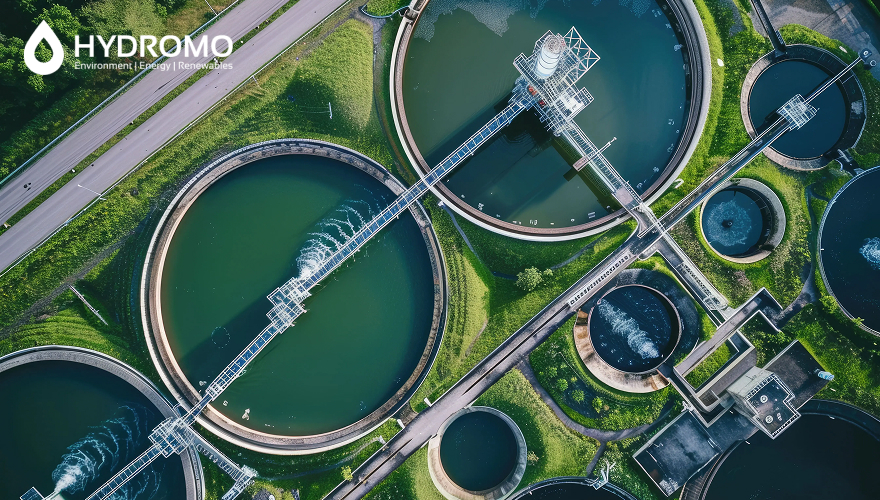
The increased water crisis in India renders the reuse of wastewater one of the strongest instruments of ensuring future water resources and safeguarding rivers and ground water. Using a combination of high-level treatment and Zero Liquid Discharge (ZLD) methods, cities and industrial facilities will be able to transform wastewater into an asset rather than a liability in the future.
India’s Water Crisis
The Indian share of freshwater in the world is very low but with a very large population India is left with a permanent water stress in most parts of the world. This stress is growing with rapid urbanization, industrialization, agriculture and climate change resulting in dwindling groundwater, river contamination and local water scarcities are frequent.
There is also an augmented rivalry among domestic, agricultural, and industrial clients to the identical or limited water resources, heightening the rivalry among individuals. In the absence of significant water management transformations, forecasts indicate that there will be dire shortages in supply and deteriorate health hazards due to polluted water.
The importance of Wastewater Reuse.
The concept of wastewater reuse implies that sewage and industrial effluents should be treated in such a way that the resulting water can be reused in a safe manner. This treated water can be used in irrigation, industrial, landscaping, and even drinking, although very sophisticated systems are required.
Due to the constant production of wastewater, it is also possible to use wastewater as a steady source of manufactured water instead of rainfall and overdrawn wells. Reuse also lessens infiltration of untreated or ill treated wastewater into rivers and lakes that aid in reduction of pollution and health risk.
Key Benefits for India
Lessens the strain on freshwater.
Wastewater treatment and reuse will relieve the limited fresh water resources to other important purposes like drinking and simple domestic consumption. It is also a cheaper and more sustainable solution to over-pumping ground water or developing long distance water transfer infrastructure.
Promotes rural agricultural life and livelihood.
Most of the Indian water is used in agriculture, and therefore substituting a portion of the agricultural demand with the treated waste will save huge amounts of water. The treated water also has nutrients which can be helpful to crops, thus saving the use of chemical fertilizers where taken care of.
Reduces pollution and conserves the ecosystem.
Instead of discharge, wastewater undergoes treatment and reuse thus avoiding direct discharge into rivers, wetlands and lakes where it destroys aquatic life and contaminates drinking sources. Waterborne diseases reduce in health because the communities are less exposed to polluted surface and groundwater.
ZLD and Superior Technologies.
Zero Liquid Discharge (ZLD) is the most intensive sort of wastewater reuse that is set to recover nearly all the water and leave no liquid effluent. In these systems, the wastewater will go through the treatment procedure that includes pre-treatment, advanced filtration (including Reverse Osmosis), followed by evaporation and crystallization to convert the rest of the concentrate into solids.
These systems are particularly useful in industries which produce highly contaminated effluent and which are under stringent environmental control. ZLD can help maintain compliance as well as long-term water security of water-intensive sectors by retrieving water and minimising the threat of pollution.
Challenges and Way Forward
Sewage and effluent treatment capacity is still a significant problem in India, with numerous plants either not there at all or, sizes or poorly maintained. To grow reuse safely and reliably requires investment, skilled operation and strong monitoring.
There is an emergence of policy initiatives that encourage water conservation, wastewater treatment, and reuse and the incentives of treated water use in agriculture and industry. International experience and adaptation to local needs can help to expedite the process of adoption and remain within cost reach.
Frequently Asked Questions (FAQ)
Q1. What is wastewater reuse in simple terms?
Ans. Wastewater reuse is the process of treating used water from homes, businesses, and industries so it can be safely used again for activities like irrigation, manufacturing, and, in some cases, drinking supplies.
Q2. Is wastewater that has been treated safely in agriculture?
Ans. Wastewater can be used safely in irrigation, and its nutrient value can be useful to the crops when treated to meet the right standards, but again, quality should be monitored and controlled.
Q3. What is Zero Liquid Discharge (ZLD)?
Ans. ZLD is a treatment approach that aims to recover nearly all the water from wastewater streams, leaving no liquid discharge and only solid residues that may be disposed of or sometimes recycled.
Q4. How does wastewater reuse help cities and industries?
Ans. Reuse provides a dependable alternative water source, reduces reliance on freshwater, helps meet environmental regulations, and can lower long-term costs for water-intensive operations.
Q5. What are the main obstacles to wastewater reuse in India?
Ans. The most critical barriers are a lack of adequate and ageing treatment facilities, a lack of funds, operational issues, and a lack of awareness among the stakeholders regarding the economic and environmental advantages of reuse.